
Harvest & Quality Control
Harvest Recording Methods: Which One Is Right for Your Operation?
Harvest is likely the single largest expense on your specialty crop operation. Labor accounts for 40 to 60 percent of total production costs, depending on your crop and region. When that much money and effort rides on every bin, how you record the harvest determines your inventory accuracy, traceability, labor costs, and compliance readiness through the rest of the year.
Piece Rate Tracking for Harvest: Productivity, Compliance & Profitability
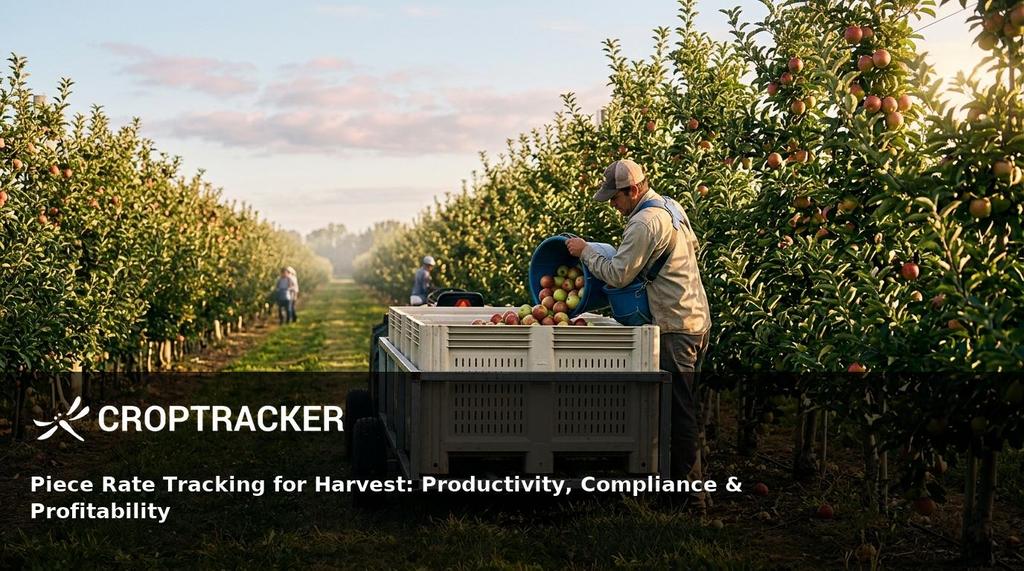
Harvest is likely the single largest expense on your farm. Labor accounts for roughly 40 to 42 percent of production expenses for specialty crops, according to the 2022 Census of Agriculture and USDA ERS data, depending on your crop and region. When that kind of money is riding on every bucket, every bin, and every bushel, you need a clear line of sight into what each picker is doing and what it costs.
Croptracker feature use case: protecting profit with picker defect and productivity monitoring

For most fresh produce growers right now, the pressure to protect already slim profit margins is high. In apples in particular, overproduction and staggering labour costs mean that no path to revenue protection can be ignored. One of the avenues our growers are increasingly headed down to help secure their profit is closer picker quality management.
With the risks of improperly handled harvest so high, the time spent training, monitoring and correcting picker performance is worth it. In this use case article, we will detail the why and how of defect monitoring at harvest for better post harvest management, higher pack-out rates and ultimately more return to the grower.
Tech round up: Pressure testers

Firmness is widely recognized as one of the most essential quality metrics in the fresh produce supply chain, acting as a universal index for gauging maturity, optimizing harvest timing, and predicting shelf-life potential. The physical structure of a fruit or vegetable determines its ability to withstand handling, storage, and transport, directly influencing its final value.
Mirroring the wider trends in agricultural technology, the processes governing firmness testing are rapidly evolving from purely mechanical methods to digital systems that offer automated readings, data logging, and seamless connectivity via USB or Bluetooth. This technical round-up reviews some of the most popular technologies used for measuring firmness in fresh produce. We have divided the tools into two main categories: Destructive testing and Non-destructive testing.
Tech round up: portable Brix meters

Brix degree measuring is an important quality metric for specialty crop growers and horticulture. Brix° levels inform both harvest planning, storage, packing and sales decision making. The accuracy and utility of field Brix readings depend significantly on managing both environmental inputs and sampling consistency. As a result, ensuring the testing tools work well and sampling processes and reporting are standardized is vital for making properly informed decisions. In this article we detail the factors influencing Brix test results, explain refractometer model options and have compared several popular Brix refractometers popular with fresh produce growers and packers.
Apple and Pear Harvest Outlook 2025

The current apple and pear harvest season is defined by a dichotomy of abundance and adversity. In North America, a projected large apple crop, led by a record harvest in Washington State, is colliding with market oversupply, stagnant domestic demand, and crippling cost increases. This has created a critical financial squeeze, forcing some growers to consider drastic measures like orchard removal.
Croptracker Feature Use Case: Speed Scanning for Berry Harvest

In this Croptracker Use Case blog, we will go over the in-field inventory and labour tracking features that help berry growers create inventory and pay records on the go. We will go through how Croptracker’s Field Pack module is designed to keep pace with harvest by integrating barcode scanning, offline piece tracking and custom product tagging. This is part two in a series on berry harvesting. To read part one where we detail some of the unique challenges facing berry growers, click here.
Traceability and Labor: The Challenges of Berry Harvesting

This blog is part one of a series on berry harvest. Part one on the challenges of harvesting berries by hand. Part two offers solutions to some of these challenges using Croptracker. Find part 2, Croptracker Feature Use Case: Speed Scanning for Berry Harvest here.
Precision in Practice: Exploring the Methods and Challenges of Hand Thinning in Apple Orchards

Maintaining an apple orchard before harvest is a demanding task that needs careful attention and a dedicated team. It involves a lot of work and requires close attention to detail. A hardworking team is essential for the success of the orchard. Hand thinning is important for good fruit quality. Skilled workers remove extra fruits to make sure there is enough space for the remaining ones to grow well. The reliance on manual labor is particularly pronounced in organic orchards, where the avoidance of synthetic chemicals necessitates only manual or mechanical thinning methods. This article will explore some of the methods, tools and challenges involved in hand or manual thinning.
Croptracker Excited to Showcase Crop Load Vision and More at Fruit Logistica 2024

We're thrilled to announce that Croptracker, a leading provider of farm management software, will be showcasing its cutting-edge solutions at this year's Fruit Logistica event located in Berlin from February 7-9. Fruit Logistica is a premier international trade fair for the global fruit and vegetable industry, and Croptracker is geared up to bring its latest innovations to the forefront of this prestigious gathering.
Apple Thinning: Mechanical Thinning Techniques and Tools
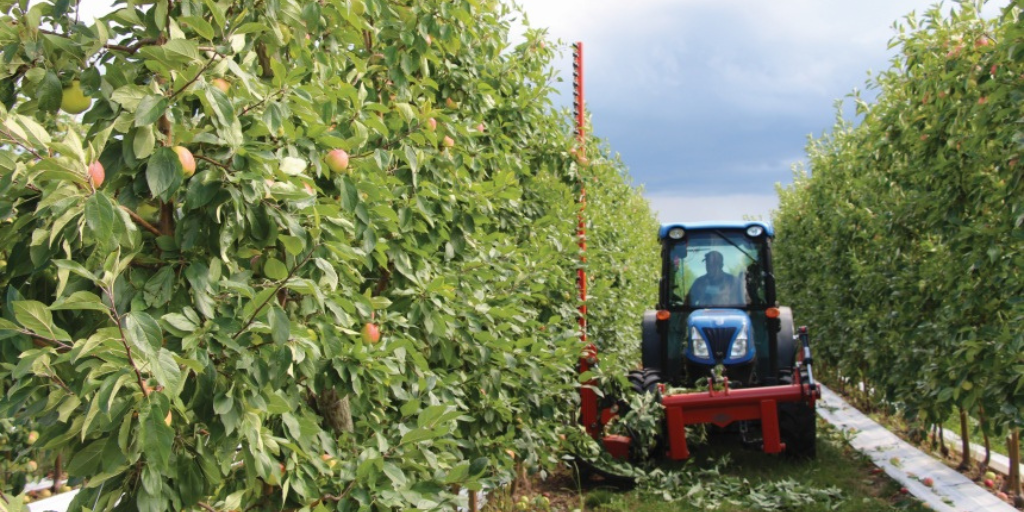
This article is part 2/4 in our Apple Thinning series and will cover mechanical thinning processes, advantages and disadvantages, and the tools most commonly used.
Apple Thinning: Crop Load Benefits and Target Setting

This article is part 1 in a 4 part series exploring apple thinning techniques and tools. This first part will cover the benefits of thinning as well as the main methods for setting targets to achieve when thinning. The following articles will get into the specifics of mechanical thinning, manual thinning and chemical thinning practices.
Croptracker releases latest update to it's Harvest Quality Vision system

Croptracker is pleased to announce the latest update to its Harvest Quality Vision (HQV) system for apple growers. HQV 4.0 was launched in July 2023 in time for Apple Harvest in North America and offers increased accuracy and ease of use for all customers.
The Case for Color Grading

Color is one of the driving consumer acceptance factors when it comes to fresh produce. Everyone wants the reddest strawberries, the sunniest yellow lemons, and the broccoli is always greener on the other side of the fence. So how do growers and retailers make sure they’re producing the fruit and vegetables customers desire? Visual inspection is the number one way consumers select their produce - obviously, most of us aren’t bringing a quality control toolkit to Loblaws. At the grocery store, consumers pick the best-looking produce and carry on, so uniformity and consistency are critical.
Croptracker’s Starch Quality Vision Brings Consistency to Preharvest Testing

An artificial intelligence approach to the apple industry’s most common quality test
Croptracker is proud to announce the launch of Starch Quality Vision; the latest artificial intelligence assessment tool for apple growers. Starch Quality Vision (SQV) technology empowers orchard managers and apple growers to empirically and accurately score starch pattern index (SPI) tests without the need for a trained assessor.
Apples and Postharvest Handling: All About CA Storage

Apples are one of the most widely consumed fruits in the world, with a global production of over 86 million tons in 2020. However, the process of harvesting, storing, and distributing apples present numerous challenges for growers, packers, and shippers. In this article, we will explore some of the challenges facing apple growers and the technological and operational innovations that are helping to overcome these challenges.
All About Starch: Apple QC and Harvest Timing

Timing is critical in the farming industry, and harvest is no exception. In the apple industry, where product may be held in controlled atmosphere (CA) storage for long periods of time, determining the ideal harvest window is even more essential to guaranteed longterm quality.
Gauges and Guides for Precision Crop Load Management

Over the last few weeks, we’ve taken a look at crop load management, from the basics to the scientific models behind the development of precision crop load growth calculations. While crop load management is one of the most difficult aspects of growing, it is without a doubt a critical step in planning and maximizing yield and profit. In the third installment in our series on precision crop load management, we’re highlighting some of the tools and decision aids growers can use when hand thinning in the orchard.
Growth Models Guide Precision Thinning

Last week we introduced the concept of crop load management. Crop load management can be a high-risk high-reward situation for growers. There exists the potential to maximize yield and quality, but there is a lack of concrete information on how. When it comes to pruning and hand thinning, many growers just “have a guy who’s been doing it for years”.
Introduction to Precision Crop Load Management
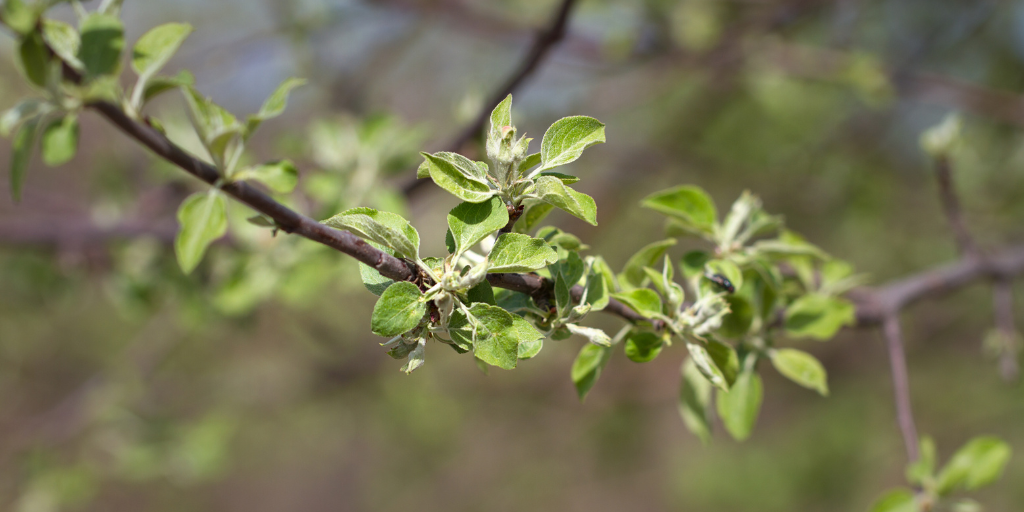
Welcome to the first part of our series on precision crop load management. Over the next few weeks, we will be taking a close look at methods and models of precision crop load management in orchards. Crop load management is a vast topic, so this week we’re starting with some of the key concepts and terms and introducing the three main methods: Pruning, Chemical Thinning, and Hand Thinning.
Request your free private demo now!
Let our expert staff walk you through the Croptracker system, and answer any questions you have.
We are here to help.